
Embarrass the sky
What’s the value of sincerity?

On a cross-country flight recently I was too exhausted to work so I watched a movie: the 2025 documentary on Counting Crows. Not because I was ever much of a fan—they were too poppy, too broadly palatable for my middle school stereo back when they were big. I wanted real angst, not this top-40-friendly variety.
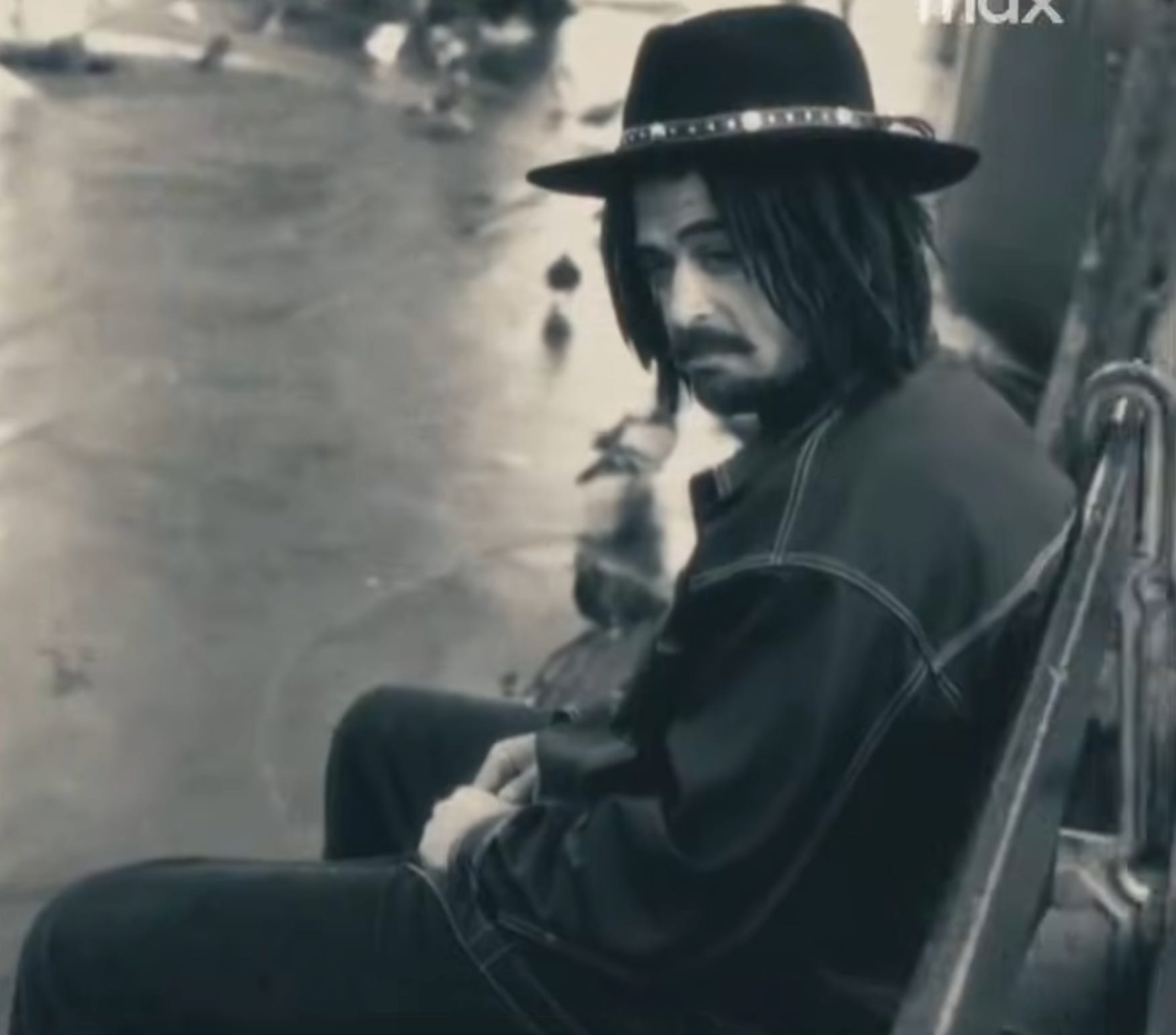
Don’t worry, I am not here to recommend this documentary to you, nor is the point of this post to discuss “the Crows”, though this will be my awkward throughline. As documentaries go, this one is not particularly well done. It opens with Adam Duritz, the lead singer, now in his 60s, pensively playing one of their songs on the piano in what looks like an empty New York apartment. But rather than evoking the kind of Icarus-after-the-sun sense of gravitas I assume was intended, what’s most striking is how distant this man seems from, well, being cool. He comes across as too self-conscious, a bit melodramatic, a bit self-absorbed (he wants you to see his boots, because they are special). He wants you to like him, many years after he became famous for singing about wanting to be famous.
I feel vaguely embarrassed for him.
The documentary proceeds through interviews, though no one thought to put names on the screen, so I don’t know who they are talking to. I can at least infer the band members from their comments. They mostly talk about Adam, his passion and determination to share his vision with the world.
The problem is that for all his talent and commercial success, Adam cannot seem to protect himself from being a bit cringe, even to his closest friends. Take his dreadlocks. I have been under the impression for years that he might be half-Black, because I’d only ever seen him in dreads. He is not. A band member describes their reaction when Adam first got them —“are we really going to go there?” Meanwhile, Adam calls it “the first time I really looked like myself to me.”
The other interviews seem quite random — people in LA around the same time, some in the record business maybe? They talk repeatedly to someone who I eventually figure out is the lead singer of ColdPlay. He says he bought one of Adam’s dreads at an auction. I can’t tell if it’s meant to be a joke. We learn that Courtney Cox of Friends, who dated Adam for less than a year (shortly after he dated Jennifer Aniston) declined to be interviewed. There is conflicting information about how real the relationship was; Adam calls it his longest relationship, and talks about her influence on his art. Others imply it was a blip.
Can a documentary be embarrassed by its subject? It’s the kind of thing you watch to the end because it’s hard to look away. Still, something about the mixture of sincerity and cringe pulls me in, as if it’s a puzzle to be solved, how wanting deeply to be understood can nonetheless leave one embarassed and read as cliché.
We see photos from a shoot the band did in Dublin shortly after they became famous, their expressions so lugubrious it’s almost comical. Duritz is ashamed at how “fucking mopey”they look. By way of explanation, we learn that he was later diagnosed with depersonalization-derealization disorder, a recent addition to the DSM that manifests as a persistent feeling that things are not real, even if one knows they are. Given everything else we’ve learned, it’s hard not to note the irony, as if the threat of his inauthenticity arises from his very core.
I would like to think that being truly sincere can save one from embarrassment, that sincerity endows one’s actions with a clarity that lets the real self show through. Watching someone who seems very sincere, if overdramatic at times, repeatedly get interpreted as a cliché is uncomfortable. It seems unfair.
But what does sincerity owe us exactly? And how do we know when we’ve attained it? Is wanting to express yourself, or have your deepest yearning recognized, the way Adam Duritz seemed to crave, enough? Or does real sincerity require alignment between one’s desires and actions? It does seem that being sincere in your goals is not generally enough to get your walking, talking, approval-seeking self to live those aspirations instead of role-playing. We have all sincerely wanted things—relationships or jobs or awards or popularity—-and failed to convince others we deserved them. We are all the product of many different environments and neuroses that push in different ways. Directing them toward the singular vision of seeking some kind of truth of ourselves, free from self-deceit and hypocrisy, is not trivial. It’s not even clear to me that it’s something we can control in most instances, given how warped our self-perception can get by what we think others expect.
In an essay on sincerity, Joe Carlsmith describes it as achieving a harmony between different parts, or motives, within yourself, which seems right. Merely wanting a state of harmony within oneself is not enough. It’s easy to want things that inspire self-conflict.
Embarrassment, on the other hand, is more like a wish to have been less visible or legible to others. I looked for whether anything serious has been written about it as a philosophical category. Despite being one of the most universal human emotions, it appears underanalyzed. I find a bit about how Socratic times were the age of shame. Shame is embarrassment taken to the extreme, where even when the reason for it might be superficial, like feeling ashamed of one’s appearance, the experience is one of others seeing fully through you.
This “nowhere to hide” feeling reminds me of a verse I always liked in Bob Dylan’s Farewell Angelina:
King Kong, little elves
On the rooftop they dance
Valentino-type tangos
While the makeup man’s hands
Shut the eyes of the dead
Not to embarrass anyone
But farewell, Angelina
The sky is embarrassed
And I must be gone
Maybe sincerity and embarrassment go hand in hand, and it’s when some portion of you is truly sincere that you are most at risk of being seen through. If that’s the case, we should distinguish this form of embarrassment from the kind that arises from carelessness. If sincerity aims for a harmony between all the parts of yourself, then in the sincere act, the most challenging source of friction—the internal kind—is gone. Any friction or shame you might face in the world pales in comparison. We may try but fail to fully achieve this alignment, leaving us feeling exposed. But in such instances it is almost always better to fail than to not try at all.
This gets at an interpretation of sincerity as a kind of antidote to regret, a way of stripping gravity away from counterfactual worlds in which you might have acted differently. If you’re truly sincere, it’s always ok to say or do something. You can’t assume that the recipient or the world at large will be able to appreciate it, then or ever. And it might end badly, making you wonder whether it was worth it. But if you really are sincere at the time, even time passing and changing you poses no threat. Writing this makes me realize that I see sincerity as a kind of salvation, a state which if I can achieve, means my actions must prevail in some invisible accounting to myself. I can forgive myself for saying something naive or fumbling a relationship or making things too hard for myself if my actions were true to what I felt at the time.
Maybe this is why I find myself feeling jealous of Adam Duritz, despite the friction that seemed to surround his interactions with the world. Points in his career might not have been distinguishable from the soccer player performing injury while everyone else continues down the field, but if there’s one thing that this very mediocre documentary does, it’s establishing that he was (and is) sincere even with his cringiest actions. He never gave up on trying to align who he was with who he showed the world. So he embarrassed himself at times, in the eyes of others. So what. At least he wasn’t pretending.
But how does sincerity relate to being consistently interpreted as “not the real thing?” Clearly sincerity wasn’t enough to save Duritz from cliché. He became a poster child for the performance of angst and commodification of grunge. Unlike the Seattle bands coming to fame around the same time, the Counting Crows weren’t clearly defining themselves in contrast to the 80s hair metal that came before them. They were just trying to be part of something, and landing too close to predecessors in the eyes of many. According to Rolling Stone in 1994, critics were always describing the other bands that the Counting Crows reminded them of. The “sha la la la” part of Mr. Jones was deemed an overly literal interpretation of Van Morrison. Even the cover art of their famous debut album was accused of being derivative.
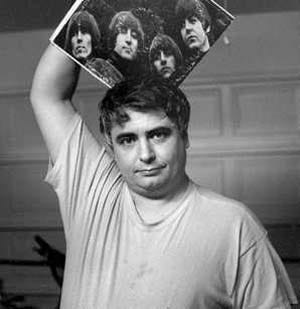
It can’t be the rule that cliché accompanies sincerity, or even wearing your heart on your sleeve. Because when I think about the epitome of sincerity in music, I think of someone who was also the epitome of idiosyncracy: Daniel Johnston. He poured an intense (and legitimately manic) vulnerability into his music without any impression he was putting you on. He could write a song like True Love Will Find You in the End and somehow avoid any air of schlock by being so sincerely, unaffectedly himself. There’s a part in Funeral Home, one of several songs on his 1990 album in which he seems fixated on the idea of death, where he commands the crowd in the background to sing along. You hear the audience chuckling with embarrassment. “No I can’t do it,” a guy says. He made some people uncomfortable, he was undoubtedly often misunderstood. But his sincerity never led to cliché.
But there aren’t many Daniel Johnstons. Maybe we should expect sincerity and cliché to correlate. I used to think that if I was able to truly be myself, I would necessarily be seen as different, unique. But if I’m honest with myself, I don’t think too many of my interests or passions or actions–including the truly sincere ones–are really that original. Maybe there’s originality in the combination, but recombinant novelty doesn’t really earn the same respect as what we think of as genuine originality (as many recent conversations on AI and creativity make clear). No matter how original you might think you are, there’s almost always a type already available for each of the different aspects of what makes you you. The economists are not horribly off-base when they model human populations as distributions over predetermined categories, e.g., the world is comprised of people who prefer chocolate ice cream and those that prefer vanilla.
This is also true of most experiences, that the “suchness” or character that we recognize in them when we tune into the moment is reminiscent of some familiar form, some kind of category. In this sense, life can feel like lots of clichés strung together, just in new combinations. I have been stuck on this lately, including the lack of apparent novelty even in my happiest or most “peak” experiences.
At first I found it depressing. What is life after realizing that nothing will ever be truly new? But I am starting to see the lack of genuine novelty as not necessarily a bad thing. Clichés arise because sometime, somewhere, something was resonant enough to get repeated. From this perspective, sincerity doesn’t just fail to protect from cliché, it may be the secret ingredient by which things become clichés. Maybe noticing this all around you is a bit like feeling like things are not real, like you are in a parade of already played events.
But a string of clichés unfolding in real time can still achieve a kind of transcendence, a realness beyond the usual blur of experience.
At one point we see excerpts from the band’s 1994 Saturday Night Live performance of Round Here, which they played as their first song instead of Mr. Jones, against the producers’ will. It’s really a performance of Adam – melodramatic, as if he’s auditioning for a tragedy – but in the slowly rising crescendo he communicates something that transcends his slouchy grunge hat and Eddie Vedder-esque affectations. It’s a song about desperation amidst tropes, but it’s Duritz’s desperation to be seen, to connect to the moment if only while on stage, that brings it alive.
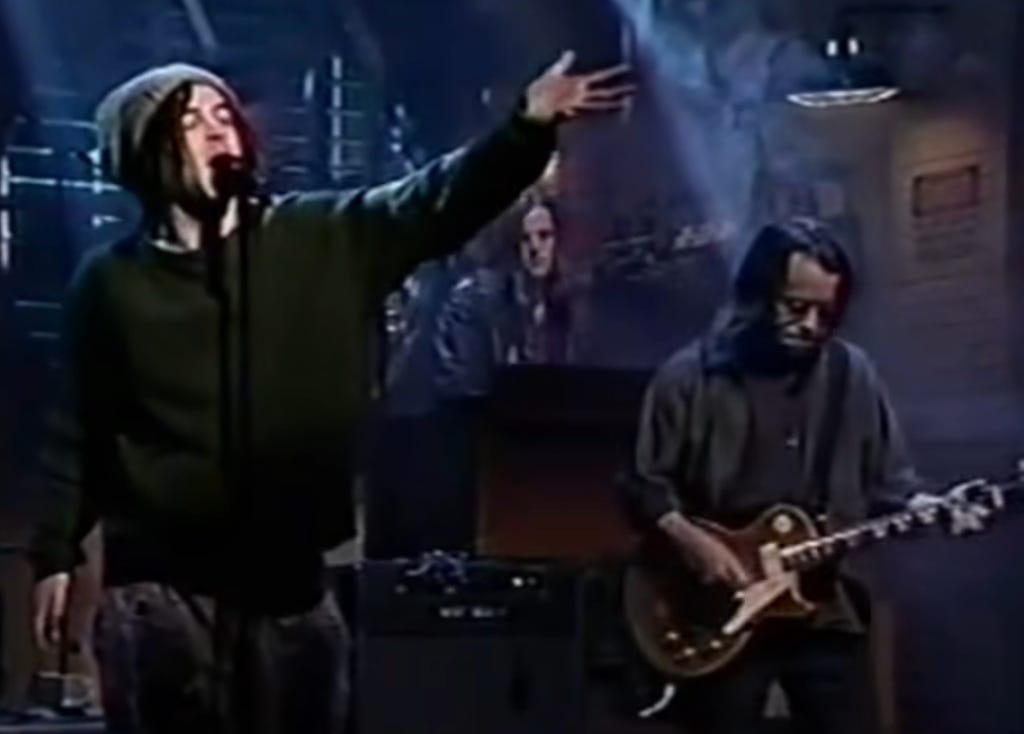
It’s like the urgency of his performance has somehow thrown the cliché back on the viewer, providing the familiarity of metaphors without being reducible to them. It’s a good reminder that all cliché belongs ultimately to the viewer. You can blame the author for not surprising you, or you can learn to appreciate the juxtaposition of so many types. Plus there’s always the possibility that today’s cliché is your first time feeling exactly that.
From this perspective, sincerity is hard to separate from hope. It’s like a prayer to the world, that others will see what you see or share in how you feel. To avoid sincerity because it might embarrass you is like choosing not to be seen at all. Instead, the height of sincerity–and perhaps self-realization–is to attain a level of sincerity that embarrasses the sky.